
Home / Guides / Fire Debris Cleanup
Spokane Fire Debris Cleanup Guide
What actually has to happen after a house or wildfire in Spokane County. Written August 26, 2026, by Jared Cozzocrea, a demolition contractor who hauls this material, not a landscaping blog.
Updated August 26, 2026
Start Here. Do Not Scoop First.
If your house, shop, or garage burned in the Spokane Complex Fires, or in a structure fire anywhere in the county, the instinct is to get the pile gone. That instinct will get a load rejected, a claim delayed, or a county stop-work. Ash from a building is not yard waste. It can hold asbestos, lead, burned plastics, and household chemicals.
This guide is the sequence we run on fire jobs. Agency pages change. Check the linked sources before you move material. If the structure has to come down, or the debris has to come off the lot, that work is fire debris removal.
1. Only go back when it is posted safe
- Do not cross official tape or enter a building marked unsafe.
- Look for downed power, gas odor, and foundation movement. Leave and call the fire department if you smell gas.
- Photograph everything before anyone moves a board. Insurers pay on what you can show.
- Keep kids, pets, and anyone without PPE out of ash.
Spokane Regional Health District and Spokane Clean Air both warn that wildfire and structure ash can irritate lungs and skin. N95 or P100, goggles, gloves, long sleeves, boots. No dry sweeping. No leaf blower. No shop vac without a HEPA filter.
2. Household hazardous materials come before the excavator
On many 2026 fire parcels in Spokane County, EPA is surveying and removing household hazardous materials at no cost to the owner under a FEMA assignment. Paint, solvents, oils, pesticides, batteries, lithium-ion batteries, and compressed cylinders are in that bucket. EPA does not remove ash or the burned building. That stays demolition and haul-off.
Spokane Regional Health District Health Officer Emergency Order 2026-01 restricts substantial rebuilding, grading, excavation, foundation work, and utility installation until HHM assessment and removal are complete, or otherwise approved. If you opt out of the EPA program, you still have to document that the hazardous materials are gone. Confirm the parcel status before you hire a machine.
County opt-out and program details: Spokane County Fire Debris Disposal.
3. Asbestos survey. Even if it already burned.
Spokane Clean Air treats a burned structure as demolition. You still need an AHERA-certified inspector. Because fire debris is not intact, this is often an alternate asbestos survey using a grid, typically sampled at the surface and at depth, not a walk-through of rooms that no longer exist.
If a grid tests positive, the debris, ash, and soil in that grid can all become asbestos-containing waste. That changes packaging, who can run a machine, and the dump rate. It is why a quote that says "we will figure out asbestos later" is not a quote.
Read Clean Air's fire fact sheet before you hire anyone: Spokane Complex Fire Fact Sheet (PDF). Phone: (509) 477-4727.
4. Notice of Intent, then the waiting period
A Notice of Intent has to be on file with Spokane Clean Air before demolition. The wait is 10 days, or 3 days for a qualifying owner-occupied single-family residence. NOI fees have been waived for many 2026 Complex Fire properties, including emergency notices. An emergency waiver of the wait exists only where the project qualifies under Clean Air rules. Filing the day the contract is signed is how you stop losing a week.
5. The demolition or debris permit
Spokane County Building and Planning wants a demolition or debris-removal permit before structural debris comes off most parcels. Phone (509) 477-3675, email [email protected], or use the county's online permit center.
If you rebuild in substantially the same footprint and location, the rebuild building permit can cover the demolition, so a separate demo permit is not required. That is a common path after these fires. Inside city limits, the city issues the permit instead of the county. More on that: demolition permits and asbestos surveys in Spokane.
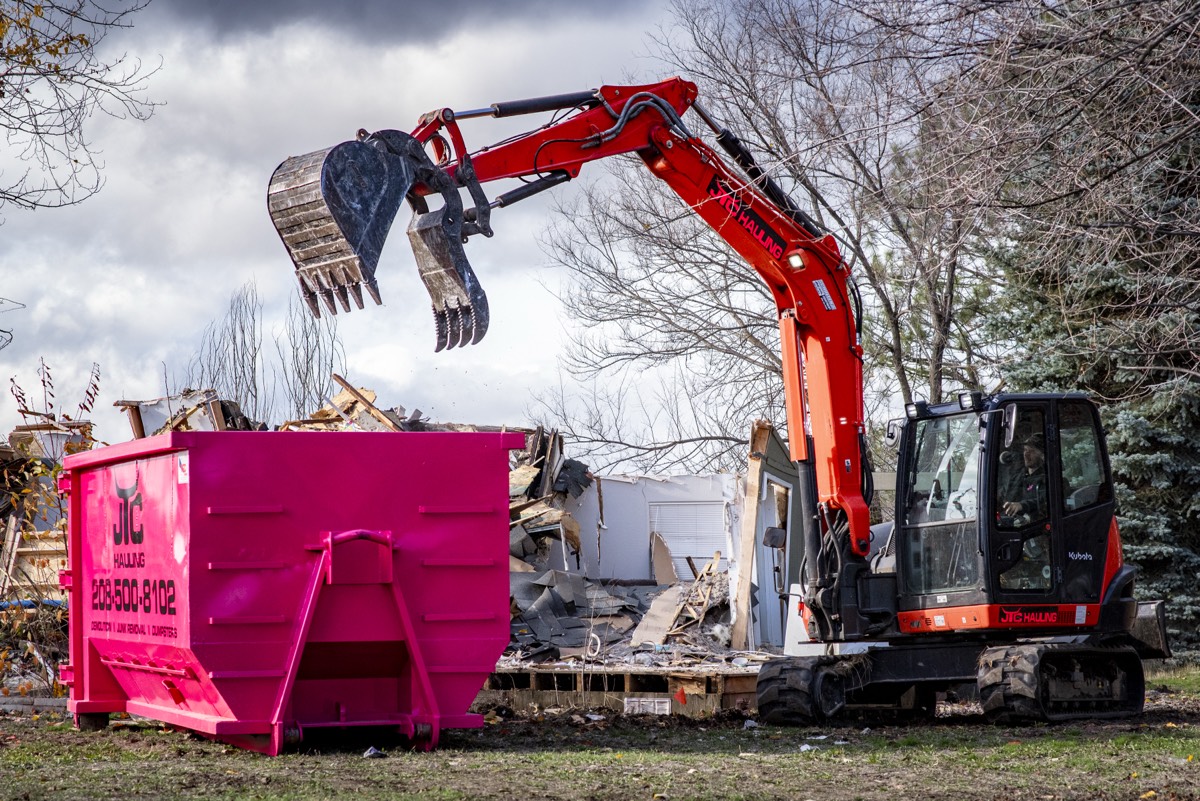
6. Where fire debris can actually go
Graham Road Recycling and Disposal Facility, 1820 S Graham Rd, Medical Lake, WA, is the county destination for ash and for asbestos-containing fire debris. Call (509) 244-0151 before you show up. They inspect loads. They reject items. They do not refund rejected loads.
Graham Road does not take scrap metal, general household items, electronics, refrigerant appliances, or vehicles. Those have to be split out. A contractor who loads a burned living room, a fridge, and the ash into one trailer is bidding a load that will bounce at the scale.
North County and Valley transfer stations can take some identifiable fire-damaged material when a negative asbestos survey accompanies the load. Dedicated ash does not belong there. Sunshine Disposal and the county both publish the current split. When in doubt, call Clean Air and Graham Road, not Facebook.
7. Hiring a fire debris contractor without getting taken
The Washington Insurance Commissioner has been warning fire victims about unsolicited crews who pressure a same-day signature and a big deposit. Check L&I at secure.lni.wa.gov/verify. Ask for a written scope, an itemized number, a disposal method, and a stated asbestos position. Local matters. Out-of-state trucks that appeared last week do not know Graham Road's rejection list.
Ask how they will protect a surviving septic, well, remaining slab, or utility that made it through the fire. Heavy equipment on a burned lot will find every tank you did not mention.
JTC Demolition is a licensed demolition contractor, not a restoration franchise. We quote a fixed number, run the survey and permit, take the structure down, and haul legally. If that is the job you have, request a free estimate or text (509) 352-3404.
8. Insurance, in the order that keeps the claim moving
- Open the claim as soon as you can. Photograph before cleanup.
- Temporary safety measures only, until the adjuster has seen it, unless the city has ordered the structure down.
- Save every receipt during displacement.
- Inventory what burned, including vehicles and outbuildings.
- Ask the adjuster whether they require a licensed contractor for debris removal. Many policies do.
Washington Office of the Insurance Commissioner: insurance.wa.gov.
Wells, septic, and what is still in the ground
A lot of the 2026 fire ground is on wells and septic, not city water. Spokane Regional Health District handles well and septic questions after a fire: (509) 324-1560 ext. 1. Do not assume a surviving tank is usable. Do not let a demolition crew bury a tank "to save time."
Resources
Pages Worth Bookmarking
Spokane Clean Air
Asbestos, NOI, and the Complex Fire fact sheet. Phone (509) 477-4727.
spokanecleanair.orgFAQ
Cleanup Questions People Ask First
Can I clean up fire ash myself in Spokane County?
Do I need a demolition permit to remove a burned house?
How long is the Clean Air wait?
Where do I take fire debris in Spokane?
Who should I hire?
If the structure has to come down, call the demolition crew.
Free estimate in 24 hours or less. Photos and the address are enough to start.